
Small businesses can save money on office furniture by choosing quality pre-owned desks and chairs, investing in multifunctional furniture, and selecting space-saving layouts that maximize available square footage. Prioritizing essential furniture, comparing new and used options, and planning for future growth can help businesses create comfortable, professional workspaces without exceeding their budgets.
At Front Desk Office Furniture, we understand that furnishing a small business requires balancing affordability, functionality, and appearance. Whether you’re opening your first office, expanding your team, or refreshing an existing workspace, every furniture decision matters. The right choices can help you control costs while creating an environment where employees feel comfortable and productive.
Our team helps businesses find practical office furniture solutions, including new and pre-owned office furniture, modular cubicles, ergonomic chairs, and space-efficient desks. We believe businesses shouldn’t have to choose between quality and affordability. With thoughtful planning and the right furniture, even a small office can become a welcoming, organized, and efficient place to work.
Affordable Office Furniture and Space-Saving Solutions for Small Offices
The most cost-effective way to furnish a small office is to focus on furniture that serves your business today while accommodating future needs. Instead of purchasing everything new or filling every available corner, consider how each piece contributes to your daily operations.
Here are five strategies small businesses can use to make the most of their furniture budgets and office space.
1. Is Buying Pre-Owned Office Furniture Worth It for Small Businesses?
Pre-owned office furniture is often one of the most practical ways for small businesses to reduce startup and expansion costs. Commercial-grade furniture is designed for frequent use, making well-maintained used pieces an attractive alternative to purchasing everything new.
Businesses can often find quality used desks, conference tables, filing cabinets, and office chairs at prices below comparable new products.
Benefits of choosing pre-owned office furniture include:
- Lower upfront costs: Spend less on essential furniture while reserving funds for other business needs.
- Commercial-grade quality: Access durable furniture originally designed for professional environments.
- Faster availability: In-stock used furniture may be available sooner than specially ordered products.
- Environmental benefits: Extend the useful life of existing furniture and reduce unnecessary waste.
At Front Desk Office Furniture, customers can explore new and pre-owned office furniture to find options that fit their workspace and budget.
Before purchasing used furniture, inspect its condition, dimensions, stability, and functionality. For chairs, test the adjustment mechanisms and check for excessive wear. For desks and cabinets, confirm that drawers, hardware, and surfaces are in good working condition.
2. What Office Furniture Saves the Most Space?
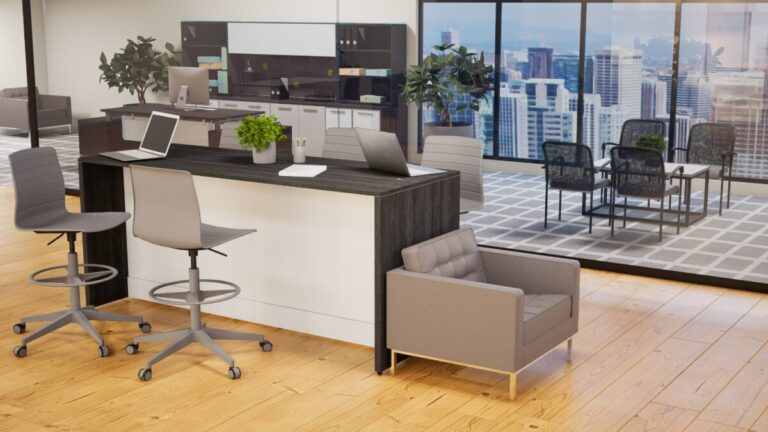
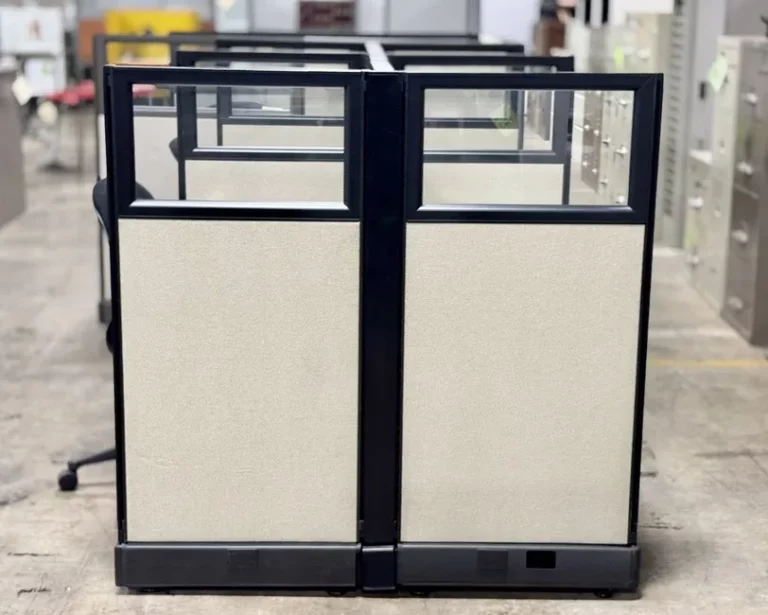
Compact desks, modular cubicles, and furniture with integrated storage are among the best space-saving options for small offices. These solutions help businesses use available floor space efficiently without compromising employee comfort.
Consider these furniture options when designing a smaller workspace:
- Compact office desks: Provide essential work surfaces without taking up unnecessary room.
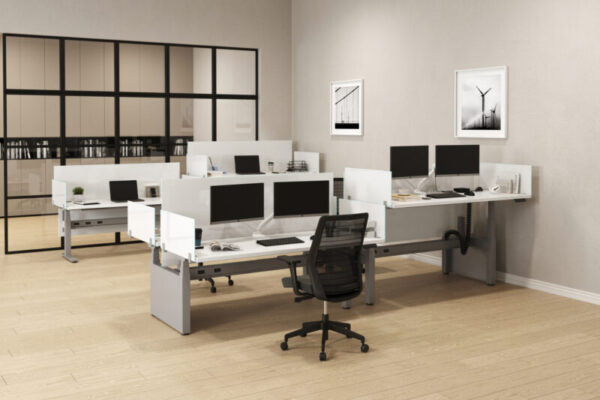
- Modular cubicles: Create organized workstations that can be reconfigured as staffing needs change.
- Mobile filing cabinets: Offer storage that fits underneath desks or moves between work areas.
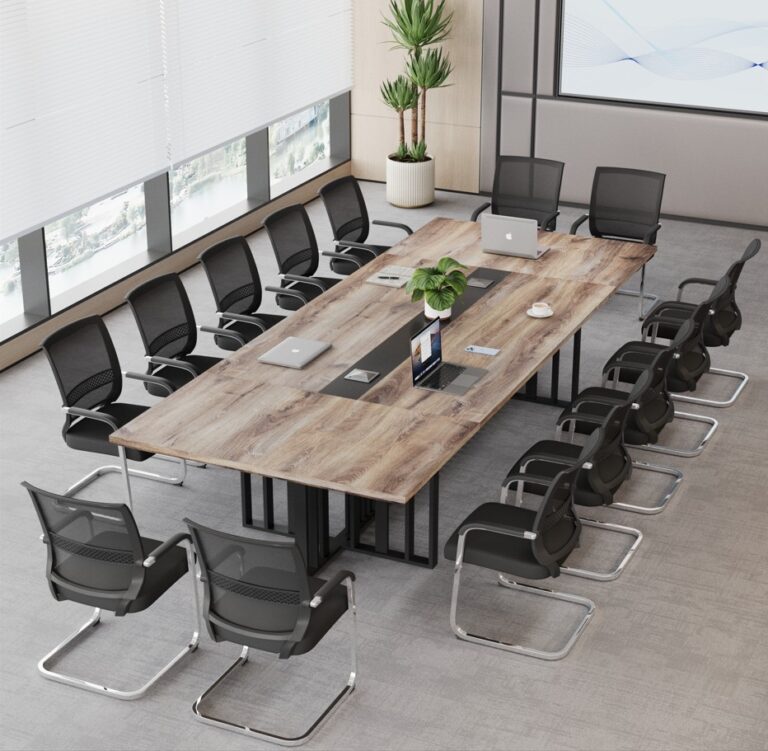
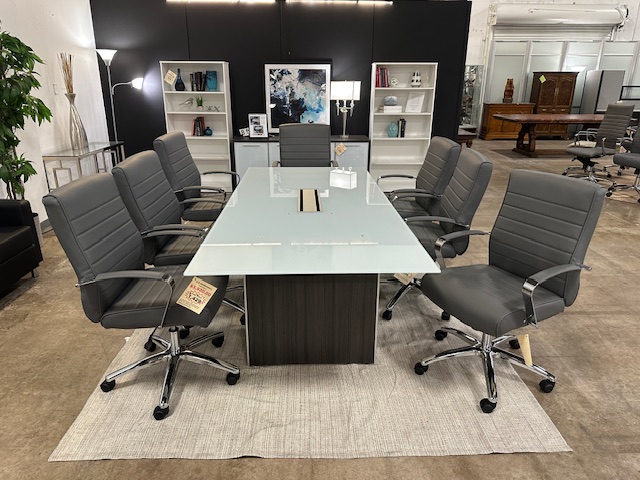
- Shared conference tables: Support meetings, collaboration, and occasional project work.
- Vertical storage cabinets: Take advantage of wall height while preserving valuable floor space.
When choosing office furniture, measure the room carefully and account for walking paths, doors, and storage access.
For example, a desk that fits comfortably against a wall may still create problems if its chair blocks a frequently used walkway.
A well-planned layout should also account for accessibility requirements and allow employees to move comfortably throughout the office.
3. How Can Small Businesses Choose Budget-Friendly Office Chairs and Desks?
Small businesses should prioritize durability, adjustability, and everyday comfort over appearance alone. A lower purchase price does not necessarily mean better long-term value if furniture wears out quickly or needs frequent replacement.
Office chairs are especially important because employees may spend several hours sitting throughout the workday.
The Occupational Safety and Health Administration (OSHA) recommends adjustable workstations that support neutral body positioning. Its computer workstation guidance emphasizes appropriate chair support, monitor placement, and desk height.
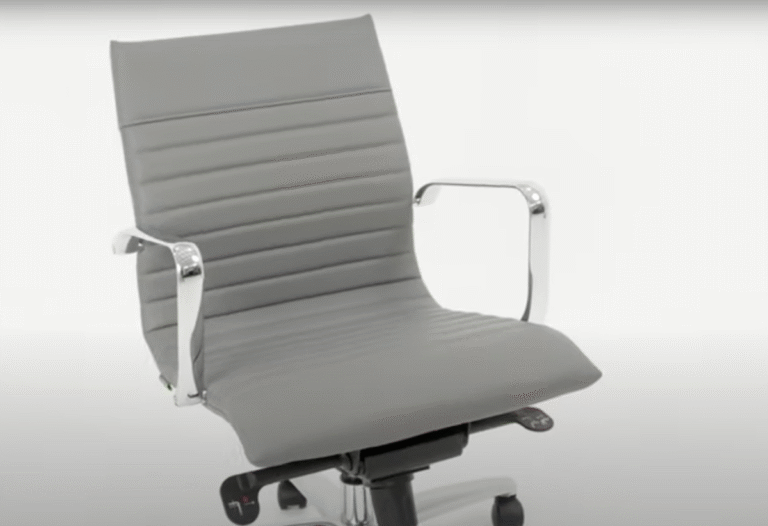
When shopping for office chairs, look for adjustable seat height, supportive backrests, and comfortable seating materials.
For desks, consider available work surface space, cable management, storage requirements, and compatibility with computer equipment.
Height-adjustable desks can also be worth considering for employees who prefer alternating between sitting and standing.
Front Desk Office Furniture offers a selection of height-adjustable desks, including showroom models and customizable options.
A combination of affordable desks and supportive chairs can help small businesses create functional workstations without unnecessary spending.
4. Should Small Businesses Choose Modular Office Furniture?
Modular office furniture is a smart choice for growing businesses because it allows workspaces to change without requiring a complete furniture replacement.
Traditional office layouts can become expensive to modify when additional employees join the team. Modular systems provide greater flexibility by allowing businesses to adjust workstation configurations as their needs evolve.
For example, a business starting with four employees may eventually need space for six or eight. Modular cubicles can make expansion easier when compatible components and sufficient floor space are available.
Other benefits include:
- Easier workstation reconfiguration
- More consistent office appearance
- Flexible arrangements for different departments
- Potential savings when expanding or reorganizing
When purchasing modular furniture, ask about product availability, compatible components, and future expansion options.
Choosing a system that can grow with your business may help reduce the cost and disruption of future office changes.
5. How Do You Furnish a Small Office Without Overspending?
The best way to avoid overspending is to create a furniture plan before making purchases. Start by identifying essential items, measuring the workspace, and establishing a realistic budget.
A practical furniture purchasing plan should include five steps:
- List your essentials. Determine how many desks, chairs, storage units, and meeting spaces your business actually needs.
- Measure your office. Record room dimensions and identify doors, windows, electrical outlets, and walkways.
- Set a furniture budget. Include delivery, installation, and any necessary assembly costs.
- Compare new and pre-owned options. Invest in new furniture where customization is important and consider used pieces where they offer better value.
- Plan for growth. Choose furniture that can accommodate future employees or workspace changes.
Visiting an office furniture showroom can also help business owners compare products in person.
At Front Desk Office Furniture, our team can help customers evaluate furniture sizes, finishes, configurations, and practical layout options before purchasing.
We also offer professional delivery and installation services, helping businesses get their workspaces ready for daily operations.
Frequently Asked Questions About Small Business Office Furniture
What is the cheapest way to furnish a small office?
Purchasing quality pre-owned office furniture is often the most affordable option. Combining used desks and storage cabinets with comfortable, durable chairs can help businesses manage costs while maintaining a professional appearance.
How much space should a small business allow for each desk?
Space requirements depend on desk dimensions, chair clearance, storage, and circulation paths. Measure the full workstation footprint and ensure the layout provides appropriate accessibility and comfortable movement.
Is new or used office furniture better for a small business?
Both can be good investments. Used office furniture is ideal for reducing upfront expenses, while new furniture may offer more customization, matching options, and manufacturer warranty coverage.
Can small office furniture be expanded as a business grows?
Yes. Modular cubicles, adaptable desks, and flexible storage systems can accommodate changing office needs. Choosing compatible furniture systems makes future expansion and reconfiguration easier.
Ready to Furnish Your Small Business Office?
Creating a professional workspace doesn’t have to mean stretching your budget or sacrificing valuable floor space.
At Front Desk Office Furniture, we help businesses find affordable office furniture that combines quality, comfort, and functionality. Whether you’re searching for pre-owned desks, modern office chairs, modular cubicles, or complete office furniture solutions, our team is ready to help.
Make the most of your office space and furniture budget. Contact Front Desk Office Furniture today to explore your options and start planning a workspace that works for your business.